How Non-Destructive Testing ensures safety, reliability, and quality across critical industries.
What Is Non-Destructive Testing (NDT)?
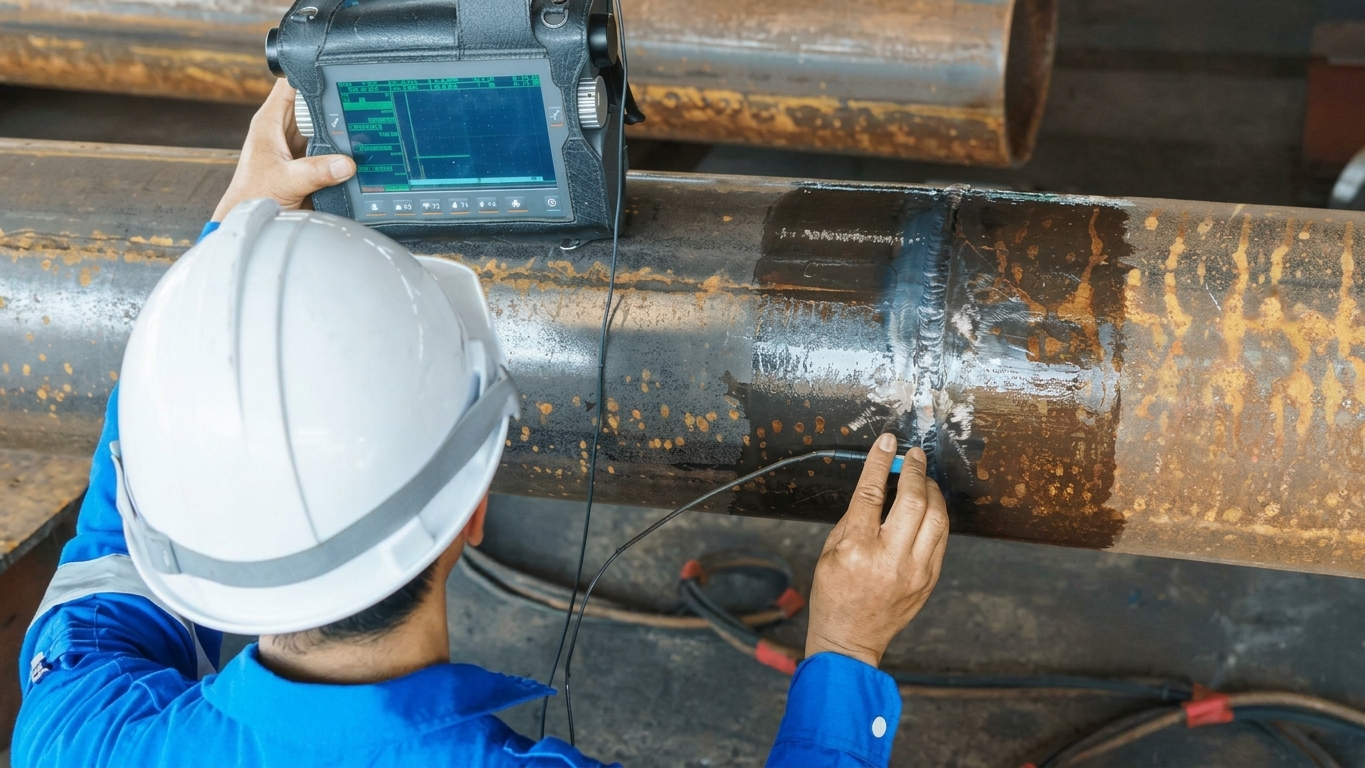
Non-Destructive Testing (NDT) refers to a group of inspection techniques used to evaluate the condition, integrity, and quality of materials, components, and structures without causing damage to them.
Unlike destructive testing, where a sample is cut, broken, or altered to determine its properties, NDT allows inspection while the component remains in service. This makes NDT an essential tool in industries where safety, reliability, and asset lifespan are critical.
The Role of NDT Professionals
NDT inspections must be carried out by trained and qualified professionals who understand inspection methods, standards, and safety requirements. Their expertise ensures that results are accurate and reliable, supporting safe operations across critical industries.
NDT: Protecting Industry Without Causing Damage
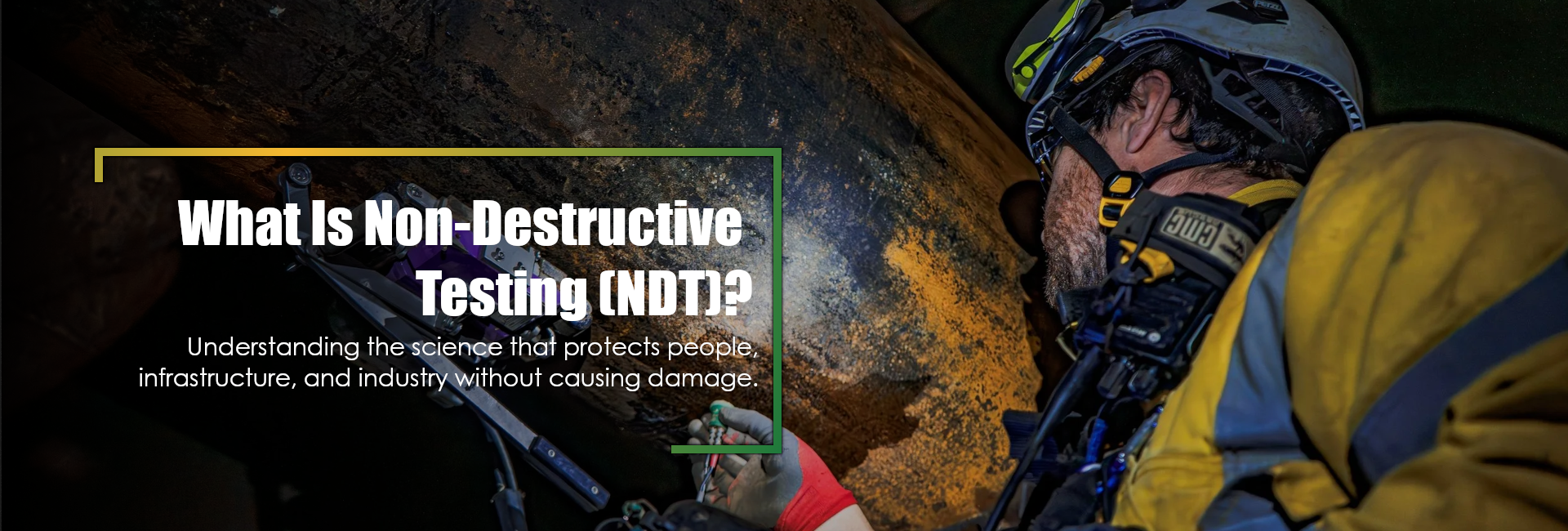
Non-Destructive Testing allows engineers and inspectors to assess structural integrity while keeping equipment operational. It is one of the most powerful tools used worldwide to maintain safety, quality, and performance.


Why is NDT Important?
NDT helps detect defects such as cracks, corrosion, voids, leaks, and material weaknesses before they lead to failure. By identifying problems early, NDT:
- Prevents accidents and structural failures
- Protects human life and the environment
- Reduces downtime and costly repairs
- Extends the life of equipment and infrastructure
- Supports compliance with safety regulations
- NDT plays a key role in risk management and quality assurance across many sectors.
Where is NDT Used?
Non-Destructive Testing is used in industries where failure is not an option, including:
Aviation & Aerospace – Aircraft structures and components
Oil & Gas – Pipelines, tanks, and pressure vessels
Power Generation – Boilers, turbines, and plant equipment
Rail & Transport – Tracks, wheels, and structural parts
Manufacturing – Welds, castings, and fabricated components
Construction – Structural steel and concrete evaluation
Oil & Gas – Pipelines, tanks, and pressure vessels
Power Generation – Boilers, turbines, and plant equipment
Rail & Transport – Tracks, wheels, and structural parts
Manufacturing – Welds, castings, and fabricated components
Construction – Structural steel and concrete evaluation